

Wildfires continue to pose a growing threat across the United States. In 2024, nearly 65,000 wildfires were reported nationwide, burning over 8.9 million acres—more than triple the acreage burned the previous year. These fires destroyed 4,552 structures, including thousands of homes, and placed substantial strain on emergency response efforts and utility infrastructure.
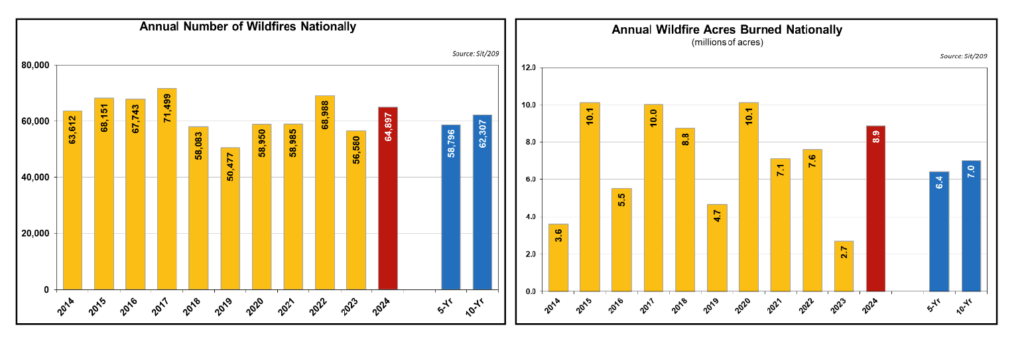
Source: National interagency Coordination Center Wildland Fire Summary and Statistics Annual Report 2024
The Need for Rapid Fault Detection
Electrical infrastructure plays a well-documented role in wildfire ignition. In California, utility-caused wildfires have been responsible for less than ten percent of the state’s total wildfires, yet they account for roughly half of its most destructive fires.
Among the most critical ignition sources is a downed energized power line. These faults typically occur in remote locations under high wind conditions and often remain undetected long enough to ignite dry vegetation. Research from Texas A&M identifies this as the single largest issue contributing to utility caused wildfires, emphasizing that these hazards are not easily detectable with traditional monitoring approaches.
In wildfire-prone regions, early detection of faults can mean the difference between a contained incident and a large-scale fire. Faults caused by downed lines or equipment failures can lead to rapid ignition, especially under dry and windy conditions. Traditional inspection methods may not detect these faults quickly enough, particularly in remote or rugged terrain.
To close this gap, utilities are increasingly adopting real-time, field-deployable technologies. Communicating fault indicators, such as the Patrolman Plus, provide immediate detection and precise fault localization. When deployed along overhead distribution lines, these devices reduce the need for prolonged field patrols and accelerate crew response, especially in hard-to-reach locations.
Field-Proven Detection with Patrolman Plus
The Patrolman Plus is a communicating overhead FCI. It utilizes cellular connectivity to transmit location and data back to the utility. Each unit is clamp-and-play, with integrated LTE and GPS, allowing for immediate use upon installation without additional equipment.
Key capabilities include:
- Real-time alerts for permanent and temporary faults.
- GPS-based location tracking.
- Battery and signal status reporting.
- Regular line condition values (average and peak load)

System Integration

These units are integrated with SGS’s webbased online portal, enabling utilities to monitor system-wide conditions and faults via a userfriendly interface. The platform supports direct customization of alert recipients, and it allows seamless integration with existing utility systems such as OMS, GIS, or SCADA.
Best Use Case and Deployment Strategy
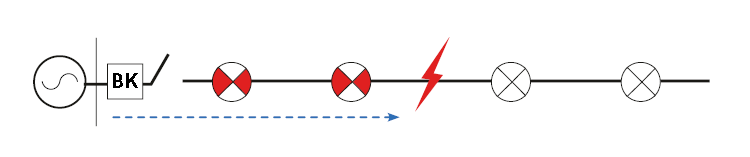
The Patrolman Plus is well suited for overhead distribution in areas where lines traverse long distances through rural, mountainous, or heavily vegetated terrain. These environments often face dry, windy conditions that increase the risk of ignition from faults or downed lines. Prioritizing areas with known fault histories or access challenges allows utilities to respond more efficiently when problems arise. Deploying units at regular intervals—typically every few miles—provides consistent fault visibility and allows utilities to detect and localize issues in real time.
