Fault Indicator Impact: Enhancing Reliability and Operational Efficiency
This white paper outlines the impact of a communicating fault indicator system, based on a study by
SEnergyusing modeled data from a Texas electric cooperative. The study quantifies the reduction in patrol
time, outage duration, and system losses in circuits with and without fault indicators. It does not include
potential cost savings from labor, fuel, vehicle wear, or other operational factors.
Reliability & Cost Benefits
In one modeled rural distribution system, the
deployment of fault indicators resulted in a
substantial improvement in reliability—reducing
SAIDI from 506 to 169 and increasing annual power
sales by 18,000 kWh.
Key Impacts:
Improved reliability metrics
Faster outage response and restoration
Reduces revenue loss from unsold energy during outages
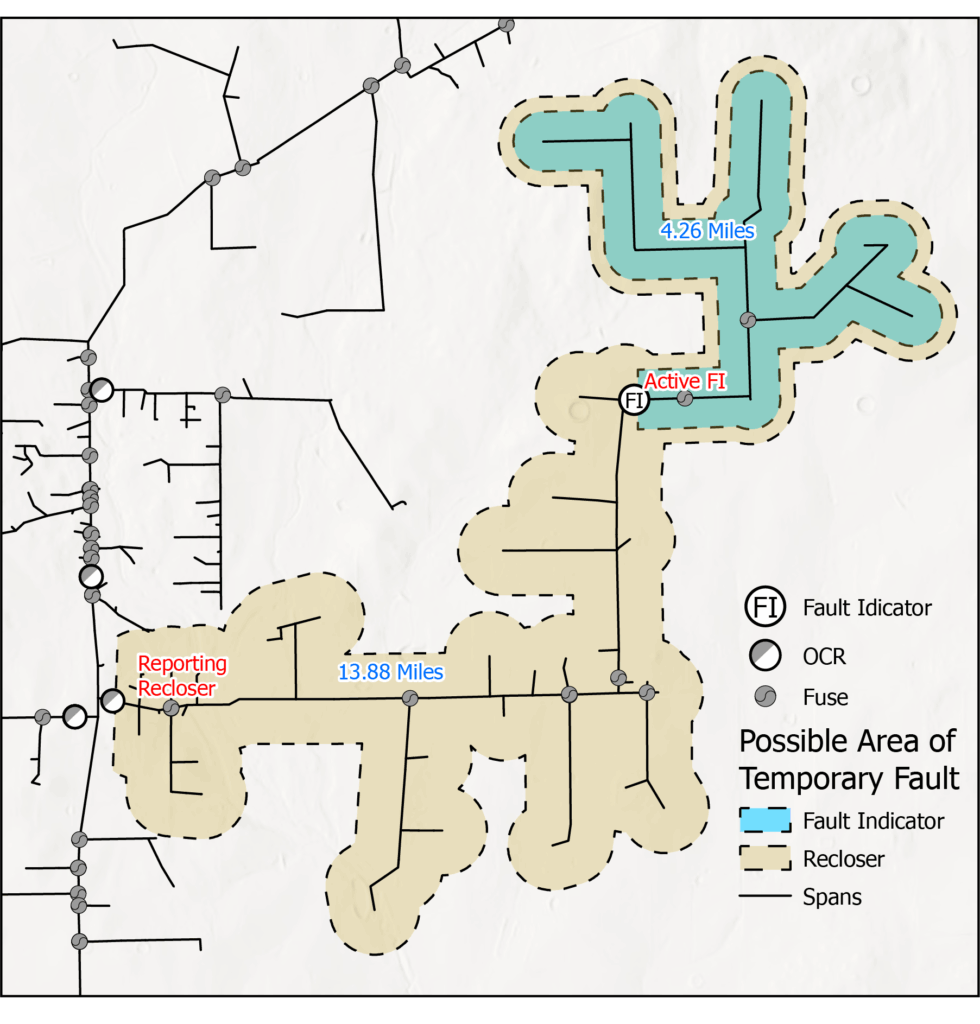
Temporary Fault Isolation
Recurring temporary faults can be difficult and
time-intensive to locate, especially in rural systems.
In this scenario, the use of a single fault indicator
reduced the patrol area from 13.88 miles to 4.26
miles.
Key Impacts:
Improved reliability metrics
Faster outage response and restoration
Reduces revenue loss from unsold energy during outages
Coordinating Fuses
Non-Coordinating Fuses
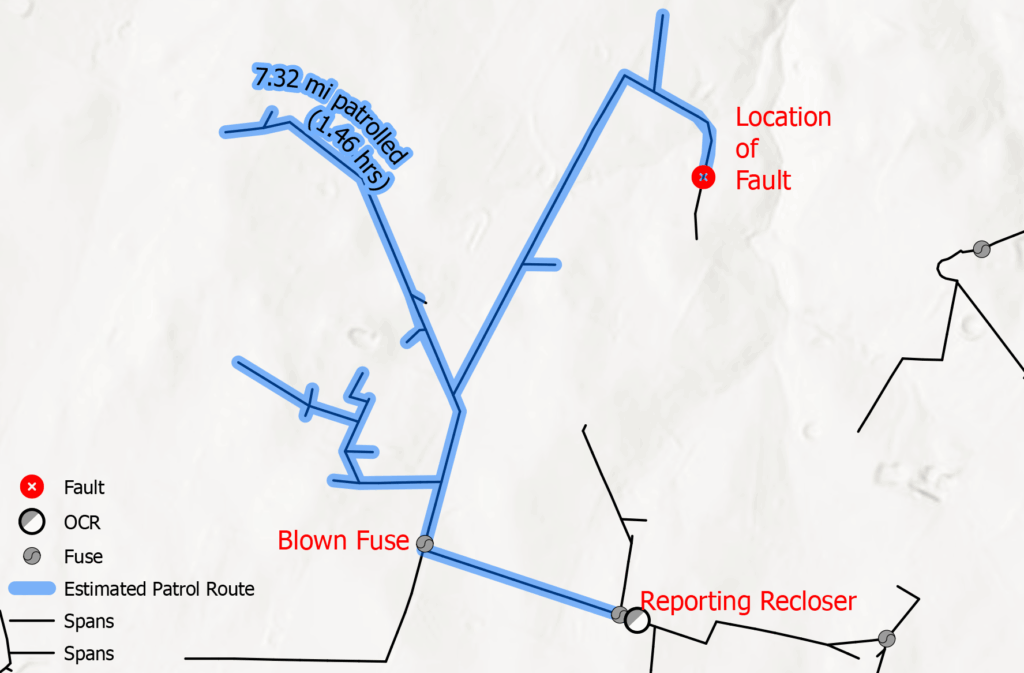
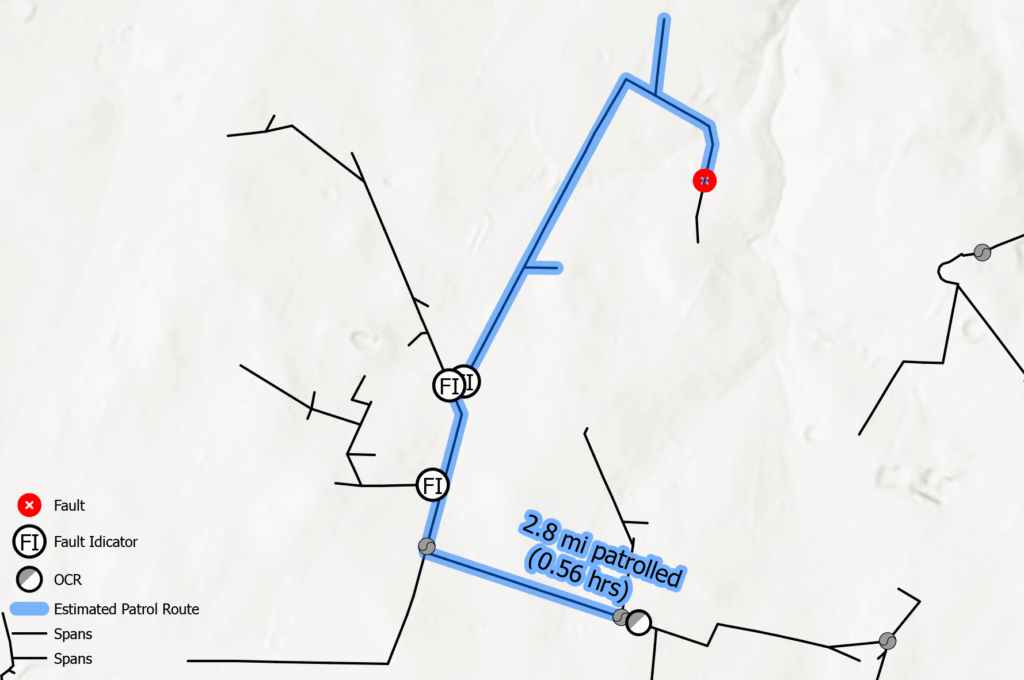
Patrol Route – Coordinating Fuses
In this long, rural section of line, the patrol area to
locate a fault was reduced from 7.32 miles to 2.8
miles by utilizing fault indicators. This helped guide
the patrol route and significantly reduced the time
needed to identify the fault location.
Key Impacts:
Reduces patrol distance, even in wellcoordinated systems
Helps crews quickly rule out unaffected segments
Saves time and resources on long rural feeders
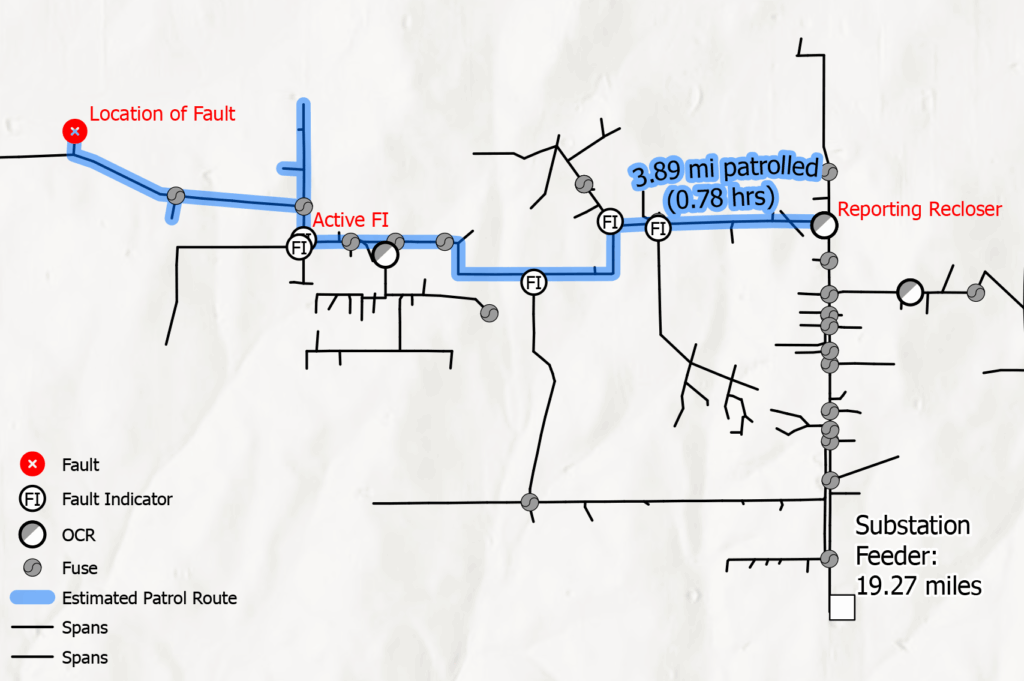
Non-Coordinating Fuses
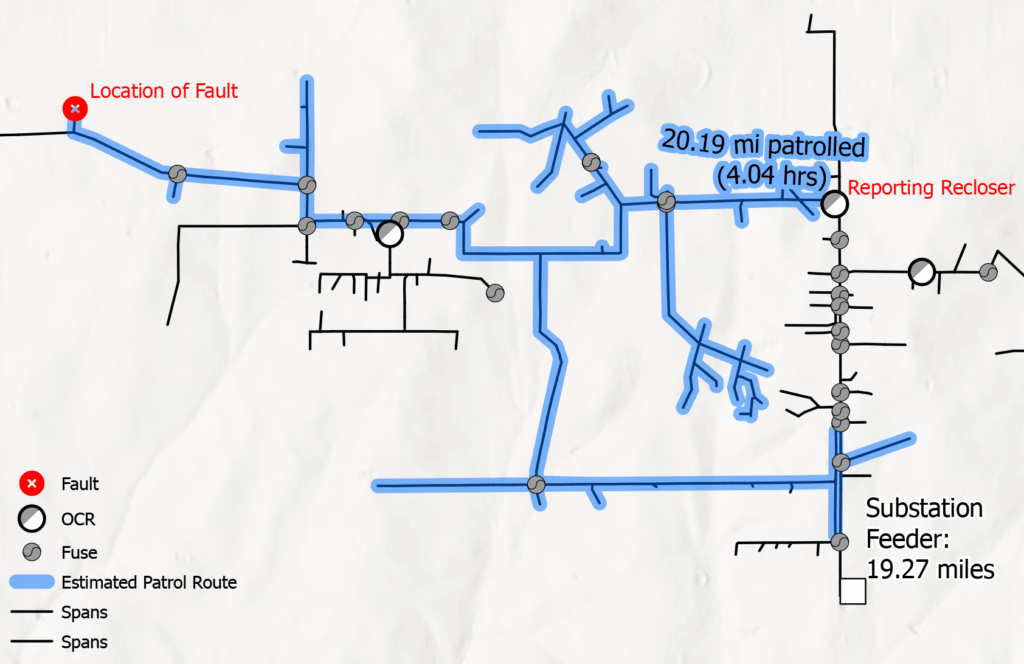
Patrol Route – Non-Coordinating Fuses
When fuse coordination is lost due to incorrect
sizing or aging equipment, patrol time can increase
significantly. In this model, patrol distance was
reduced from 20.19 miles to 3.89 miles with the
use of fault indicators.
Key Impacts:
Mitigates challenges caused by noncoordinating fuses
Cuts patrol distance and time on complex feeders
Speeds up fault isolation even without ideal protection coordination